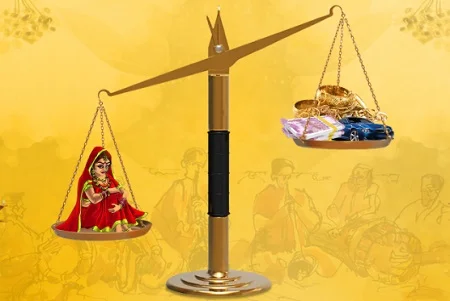
When a marriage breaks down in Pakistan, one of the most emotionally and legally charged disputes that follows is over dowry — or jahaiz. Who owns these items? What happens if they are not returned? And what can a wife legally do about it? These are questions that thousands of Pakistani women face every year, yet many remain unaware of the legal protections available to them.
This blog explains, in plain terms, what Pakistani law says about a wife's rights over her dowry articles, what counts as dowry in the first place, and what remedies are available if those articles are withheld after separation or divorce.
As experienced family lawyers in Peshawar and lawyers in Islamabad, Zia Law Firm has represented numerous women in dowry recovery cases. This guide covers your legal rights and the remedies available under Pakistani law.
What Is Dowry Under Pakistani Law?
Dowry — known as jahaiz in Urdu — is formally defined under the Dowry and Bridal Gifts (Restriction) Act, 1976. Under Section 2 of this Act, dowry refers to any property given to the bride by her parents, either before or after marriage, directly or indirectly, in connection with the marriage. This definition is broader than most people assume.
The law also recognises presents and bridal gifts as a separate but related category. Under Section 5 of the same Act, a wife has an absolute right to her dowry and any bridal gifts she received. These remain her exclusive property — the husband has no legal claim over them.
Important: Courts have recognised that dowry articles do not have to be physically handed over at the time of the nikah. A wife who purchased household items using her own money after the marriage, or who received monetary gifts from her parents to buy such items, may still claim those items as part of her dowry. There is no legal bar on a woman purchasing dowry articles herself after the marriage, as such items fall within the scope of the 1976 Act.
Are Dowry Articles the Wife's Exclusive Property?
Yes — categorically. Pakistani courts have consistently held that dowry articles and the personal belongings of a wife are her exclusive property. She is not merely a temporary custodian of these items during the marriage; she owns them outright.
If those items are not returned to her after separation or divorce, she has the right to file a recovery suit before the Family Court. If the articles cannot be returned in their original form — because they are lost, damaged, used up, or the husband refuses to return them — she is entitled to their alternate value, meaning monetary compensation equivalent to the value of the articles.
Key Legal Principle: This right to claim the alternate value has been recognised by the superior courts of Pakistan, including the Supreme Court, which has held that oral testimony alone can be sufficient to establish a dowry claim. The strict rules of evidence under the Qanun-e-Shahadat Order, 1984, do not apply in their full rigour to Family Court proceedings.
What If Parents Did Not Give Traditional Dowry at the Time of Marriage?
This is a common situation, particularly among urban and educated families, government servants, and military personnel. Many parents today give cash or monetary support to their daughter rather than bulky household items, especially when the couple lives far from the family home or changes stations frequently.
Pakistani courts have acknowledged this reality. A wife who was not given traditional dowry articles at the time of marriage but who used her own income or monetary gifts from her parents to purchase household items during the marriage can still claim those items as her own property. The key requirement is that she is able to demonstrate that the items were acquired through her own resources or contributions — not necessarily through formal receipts or documentary proof, but through consistent testimony and supporting circumstances.
What Happens to Items Purchased Jointly During Marriage?
This is where the law is evolving in Pakistan. Historically, only items clearly attributable to the wife's individual ownership were protected. However, recent judicial thinking — including guidance from the Islamabad High Court — has moved toward recognising that household items purchased during the course of a marriage may be considered jointly acquired property, especially when both spouses contributed financially.
If a wife worked during the marriage and her salary was used for shared household expenses, courts are increasingly willing to draw the inference that she contributed to the acquisition of household assets — even those registered in the husband's name. Her bank statements, salary records, and consistent testimony can all support such a claim.
How to File a Dowry Recovery Case in Pakistan
A dowry recovery suit is filed before the Family Court in the jurisdiction where the parties last resided together. The following steps are typically involved:
Prepare the Plaint
The wife or her legal counsel prepares a plaint listing all the dowry articles and their estimated values. The list should be as detailed as possible, including descriptions of the items.
File the Plaint with Supporting Evidence
The plaint is filed along with any supporting documents — receipts, photographs, bank statements, or other evidence that can substantiate the claim.
Court Issues Notice to Husband
The Family Court issues notice to the husband, who is required to respond to the claim within the prescribed time.
Evidence and Witnesses
Both parties present their evidence and witnesses. The wife's own testimony, if consistent and credible, can be sufficient to establish her claim in Family Court.
Judgment and Decree
The court decides whether the articles should be returned or their monetary equivalent paid. If the husband fails to comply, execution proceedings can be initiated.
Note: Even without formal documentary proof, a wife's own testimony, if consistent and credible, can be sufficient to establish her claim in Family Court. The Supreme Court of Pakistan has affirmed this principle in multiple judgments.
Key Legal Protections for Women
Protection Against Dowry Harassment
The Dowry and Bridal Gifts (Restriction) Act, 1976 not only protects a wife's ownership rights over her dowry but also criminalises demands for dowry. Under this Act, demanding dowry from the bride's family is a punishable offence.
Alternate Value Recovery
If dowry articles are lost, damaged, or withheld, the wife is entitled to claim their alternate value. This is particularly important where the husband has disposed of the articles or refuses to return them.
Protection in Family Courts
Family Courts in Pakistan follow a more relaxed evidentiary standard than civil courts. This means that a wife's oral testimony, supported by consistent circumstances, can be sufficient to establish her claim even without formal receipts.
Useful Resources
- Peshawar High Court – Official Website
- Islamabad High Court – Official Website
- Supreme Court of Pakistan
- NADRA
For related matters, you may also want to read our guides on divorce and khula proceedings, child custody rights in Pakistan, and inheritance laws in Pakistan.
Final Word
Pakistani law provides strong and clear protection for a wife's rights over her dowry articles. These rights are not merely symbolic — they are enforceable in Family Courts, and courts have consistently upheld a wife's claim to both the return of her dowry and the recovery of its alternate value.
The key takeaway: Dowry articles belong exclusively to the wife. If they are withheld after separation or divorce, she has clear legal remedies available to her.
Disclaimer: This article is for general informational purposes only and does not constitute legal advice. For advice specific to your situation, consult a qualified family lawyer in Peshawar, lawyer in Islamabad, or wherever your matter is being handled.
Need Help with a Dowry Recovery Case?
Our specialist family lawyers in Peshawar and lawyers in Islamabad are available for confidential consultations — in person, by phone, or online.